Guide
How to Stop Your Cookies from Spreading Too Much
We've all been there: you spend an hour making dough only for it to melt into a single giant pancake in the oven. This guide breaks down the common culprits behind cookie spread so you can get that perfect bakery-style lift every time.
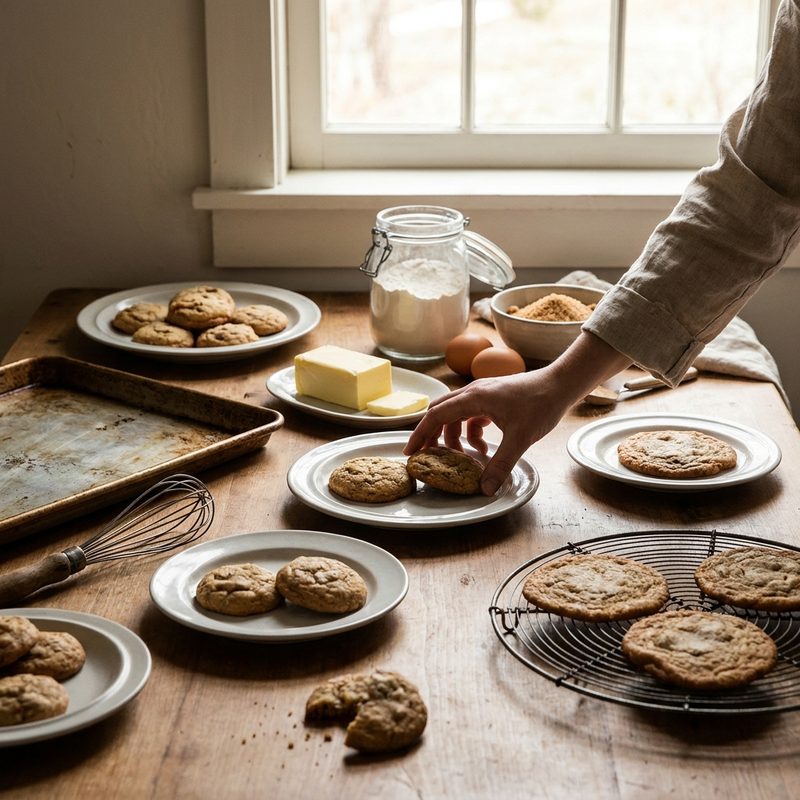
Check Your Butter Temperature
The number one reason cookies spread is butter that is too soft. When a recipe calls for 'room temperature' butter, it should still be cool to the touch and hold its shape. If your finger slides right through the stick or if it looks greasy, it's too warm. If the fat is already near its melting point before it hits the oven, it won't have the structural integrity to hold the dough up while the flour sets.
The Importance of Chilling the Dough
If you have followed the recipe perfectly and they still spread, your dough might just be too warm from the friction of the mixer. Giving your dough a rest in the fridge for at least 30 minutes (or even 24 hours) does two things: it solidifies the fat so it melts slower in the oven, and it allows the flour to fully hydrate, resulting in a thicker, more flavorful cookie.
Measure Your Flour Accurately
Too little flour means there isn't enough 'bulk' to hold the cookie together. If you are using measuring cups, avoid 'packing' the flour into the cup. Instead, fluff the flour with a spoon, scoop it into the cup, and level it off. For the most consistent results, use a digital kitchen scale; 125 grams of all-purpose flour is the standard for one cup.
Don't Over-Cream the Butter and Sugar
While we want to incorporate some air, over-mixing the butter and sugar can actually cause cookies to puff up and then collapse into thin puddles. Cream them together just until the mixture is pale and fluffy—usually about 2 to 3 minutes. If you go beyond that, you're aerating the dough too much for a standard drop cookie.
Watch Your Baking Surface
Putting fresh, cold dough onto a hot baking sheet from a previous batch will cause the bottom of the cookie to melt instantly. Always let your pans cool completely between batches. Additionally, avoid using heavy greasing or non-stick sprays; these create a slippery surface that encourages the dough to slide outward. Use parchment paper or a silicone mat for 'grip' instead.